
ERCIM News 146
October 2026
Special theme Quantum Technology
Guest editors Miroslav Dobsicek (RISE), Sebastian Raubitzek (SBA Research) and Filippo Vella (CNR-ICAR)
 No. 145
  No. 144
  No. 143
  No. 142
  No. 141
  No. 140
  No. 139
 Quantum Technology - Introduction to the Special Theme
- Details
- Category: Special Theme
- Hits: 37
by Miroslav Dobsicek (RISE), Sebastian Raubitzek (SBA Research) and Filippo Vella (CNR-ICAR)
In recent years, major advances in quantum hardware, algorithms and software have created great opportunities for scientific discovery and industrial innovation. What can be observed is that quantum technology is entering a new phase where systems are becoming the central focus. Progress is no longer defined only by better qubits, individual algorithms or isolated demonstrations, but increasingly by whether quantum components can be integrated with classical computing, software, networks, sensing platforms and real applications. This transition, from quantum components to quantum systems, is changing both the research questions and the criteria by which progress should be judged.
Quantum Optimization for Constraint-Aware Scheduling
- Details
- Category: Special Theme
- Hits: 39
by José A. Tirado-Domínguez, Eladio Gutiérrez, and Oscar Plata (University of Malaga)
Could quantum computing help address complex scheduling problems? We explore this question by proposing a structured problem representation that isolates constraints from optimization objectives. Our framework improves solution quality using fewer circuit layers than conventional implementations.
Towards Practical Quantum Multi-Objective Optimisation
- Details
- Category: Special Theme
- Hits: 29
by Zakaria Abdelmoiz Dahi (University of Lille, Inria, CNRS), Gabriel Luque and Francisco Chicano (Univerisity of Malaga)
Quantum computing has the potential to revolutionise optimisation, yet most existing approaches focus on problems with a single objective. Our work bridges this gap by developing scalable quantum algorithms capable of tackling realistic optimisation problems involving multiple conflicting objectives.
Quantum Neuromorphic Computing
- Details
- Category: Special Theme
- Hits: 37
by Jacopo Settino, Andrea Vinci and Carlo Mastroianni (CNR-ICAR)
Neuromorphic computing shows how the physical dynamics of a device can become part of the computation itself. Quantum systems offer a different but potentially complementary opportunity. This perspective considers how quantum dynamics, interactions, memory, and dissipation might open new directions for neuromorphic computing, beyond simply running neural-network models on quantum processors.
Hard Is Not Enough: Where Quantum Optimization May Matter
- Details
- Category: Special Theme
- Hits: 31
by Pascal Halffmann (Fraunhofer Institute for Industrial Mathematics ITWM)
Hardness alone does not identify promising quantum applications. Classical optimization has spent decades exploiting problem structure; thus, quantum methods must compete with far more than brute force. Where, then, might quantum optimization genuinely contribute, and what kinds of problems offer a plausible path to real-world utility or even advantage?
The Bottleneck is not Cryptography: Understanding the Costs of Quantum-Safe Communications
- Details
- Category: Special Theme
- Hits: 41
by Ruben Rios and José A. Montenegro (University of Málaga)
Post-quantum cryptography is no longer a theoretical exercise. As quantum-safe algorithms move towards large-scale deployment, recent studies by NICS Lab in the context of PQSecNg project show that the main challenges extend far beyond the cryptographic primitives themselves, revealing hidden bottlenecks across protocols, software stacks and network infrastructures.
Austria’s Quantum-Communication Infrastructure Testbed
- Details
- Category: Special Theme
- Hits: 41
by Hannes Hübel, Manuela Kos and Sebastian Ramacher (AIT Austrian Institute of Technology)
The project QCI-CAT is advancing Austria’s contribution to Europe’s quantum-secure communication infrastructure by bringing quantum key distribution and post-quantum cryptography from research into operational networks and real-world applications. Austrian research, industry and government partners have deployed long-distance QKD networks and demonstrated quantum-secure governmental and medical use cases laying the foundations for scalable, resilient and quantum-safe communications across Europe.
How the Laws of Physics Help to Safeguard our Digital Future
- Details
- Category: Special Theme
- Hits: 43
by Florian Kanitschar and Christoph Pacher (Austrian Institute of Technology)
From bank transactions to medical records – our digital lives depend on secrets that may not stay secure for long. Discover how cutting-edge research collaborations are turning quantum mechanics into a guardian for our most sensitive data – and how laser pulses instead of single photons can ensure that high-performance solutions remain compatible with existing telecom infrastructure.
Planning and Sizing National Quantum Communication Networks
- Details
- Category: Special Theme
- Hits: 37
by Sebastian Raubitzek, Rebecca Klingbeil (SBA Research) and Werner Strasser (fragmentiX Storage Solutions)
The European Quantum Communication Infrastructure (EuroQCI) [L1] sets a strategic goal for secure communication across the EU, yet the size and shape of the national networks needed to achieve it remain unspecified. We present a reproducible method to estimate the number of nodes, total fibre length, and equipment required for national terrestrial quantum key distribution (QKD) networks, using Austria as a reference and scaling the results to other Member States.
From QKD to the Quantum Internet: Building a Full-Stack Quantum Network Infrastructure
- Details
- Category: Special Theme
- Hits: 42
by Claudio Cicconetti (CNR-IIT) and Alessandro Zavatta (CNR-INO, Italy)
Quantum Key Distribution is already moving out of the laboratory, but today’s QKD networks are only a first step towards a full Quantum Internet. CNR is building an inter-regional quantum network across Pisa, Florence and Rome to explore how commercial QKD can be integrated into telecom infrastructure today—and how the same testbed can evolve towards quantum repeaters and networked quantum computing tomorrow.
Forecasting Chaotic Dynamics with Hybrid Quantum Machine Learning
- Details
- Category: Special Theme
- Hits: 38
by Luca Salatino, Francesco D’Amore and Andrea Giordano (CNR-ICAR)
Quantum computing is often associated with future large-scale machines capable of solving problems beyond the reach of classical computers. However, useful applications can already emerge from today's small quantum processors. Researchers from the Italian National Research Council (CNR-ICAR) and the University of Calabria have developed a hybrid quantum-classical machine learning framework that significantly improves predictions of how chaotic systems evolve. This opens new opportunities for scientific computing and quantum-enhanced artificial intelligence.
Towards Quantum-Inspired Reactive Robots
- Details
- Category: Special Theme
- Hits: 38
by Giovanni Pilato (CNR-ICAR), Antonio Chella (Università degli Studi di Palermo) and Salvatore Gaglio (Università degli Studi di Palermo and CNR-ICAR)
Researchers from the University of Palermo and CNR-ICAR are investigating how quantum computing concepts can support action selection in reactive robots. Their work proposes a hybrid classical–quantum architecture in which sensor data are mapped into a Hilbert-space representation and used to select robot actions under uncertainty.
Quantum Machine Learning for Malware Analysis
- Details
- Category: Special Theme
- Hits: 36
by Giovanni Ciaramella (IMT Lucca and CNR-IIT), Fabio Martinelli (CNR-ICAR) and Francesco Mercaldo (University of Molise)
Quantum computing has emerged as a critical domain in recent cybersecurity research. This article explores the use of quantum machine learning for malware analysis in Windows and Android environments. We also consider explainability in the hybrid quantum approach.
Quantum Optimization in Systems Control
- Details
- Category: Special Theme
- Hits: 37
by George T. Stamatiou and Kostas Magoutis (FORTH-ICS and University of Crete)
Adaptive computer systems must decide their next action in a repeated fashion and against a time deadline. Optimization lies at the heart of that decision-making process and limits how fast they can react. Researchers at FORTH-ICS and the University of Crete used a quantum annealer inside that loop across different systems, from a queueing model to a running web server to an inverted pendulum. The controllers were shown to be operational; what still stands in the way however, is not the quantum computation itself but everything around it.
Designing how Quantum Neural Networks Represent Data
- Details
- Category: Special Theme
- Hits: 42
by Smita Chakraborty (RISE)
Quantum computers could sharpen machine learning, but only if we get one step right: how everyday data such as images, audio and tables is “embedded” into a quantum system. Understanding feature representation means building a predictive theory of embedding design, including a quantum version of the well-known classical dropout trick, that says which choices actually improve learning for a given dataset and a given computing budget.
From Quantum Randomness to Financial Simulation: Synthetic Data and Quantum Monte Carlo
- Details
- Category: Special Theme
- Hits: 27
by Enrico Barbierato and Nicoleta Mihalachi (Catholic University of the Sacred Heart)
The article connects the probabilistic foundations of quantum mechanics with practical computational opportunities in finance, while emphasizing the likely role of hybrid quantum–classical approaches.
Genetic Programming for Quantum Oracle Optimization
- Details
- Category: Special Theme
- Hits: 30
by Javier Zayas-Gallardo (Quercus SEG, University of Extremadura), Francisco Chicano (ITIS Software, University of Málaga) and Juan Manuel Murillo (Quercus SEG, University of Extremadura)
Designing quantum oracles by hand becomes unfeasible as problem complexity grows. We introduce a grammar-based genetic programming framework that automatically generates and repairs diagonal oracle circuits, minimising circuit depth. Across standard, composite, and SAT instances, the resulting oracles match or outperform existing literature and naïve baselines, in some cases by more than 80%.
Beyond a Single Measurement: Training Reusable Quantum Models
- Details
- Category: Special Theme
- Hits: 45
by Erik Källman (RISE Research Institutes of Sweden)
Quantum machine-learning models are usually trained to match a measured number. When a model's output becomes the input of another quantum model, that is not enough. Work at RISE, built on the open-source Shim library, shows what a reusable and composable quantum model must actually preserve, and tests whether an optimiser can learn it.
Quantum Logic Programming in Prolog
- Details
- Category: Special Theme
- Hits: 43
by Giovanni Pilato (CNR-ICAR), Salvatore Gaglio (Università degli Studi di Palermo and CNR-ICAR) and Filippo Vella (CNR-ICAR)
Programming quantum systems still requires working with low-level circuit operations. Researchers at CNR-ICAR and the University of Palermo are exploring a higher-level alternative: Quantum Logic Programming in Prolog (QLPP), which translates logical formulas into sequences of quantum gates. Although quantum computing is progressing from theoretical promise toward increasingly powerful hardware platforms, programming quantum systems remains a challenge. QLPP aims to address this by providing a high-level approach for researchers who are used to rule-based and logic-based descriptions of problems.
The Quantum Software Crisis: A Reminder of Classical Software Engineering
- Details
- Category: Special Theme
- Hits: 40
by Enrique Moguel, Jaime Alvarado-Valiente, and Javier Romero-Alvarez (Universidad de Extremadura)
If we wait until quantum hardware becomes mature before thinking seriously about Quantum Software Engineering (QSE), we risk repeating the same mistakes. The software crisis showed what happens when hardware evolves faster than software engineering. This article revisits the classic software crisis, in which we emphasize that learning from the past is essential for developing the methodologies and abstractions needed to prevent a future quantum software crisis.
Towards the Design of Service-Oriented Hybrid Quantum-Classical Systems
- Details
- Category: Special Theme
- Hits: 33
by Álvaro M. Aparicio-Morales, Ernesto Pimentel (University of Málaga) and José Garcia-Alonso (Universidad de Extremadura)
Quantum computing is unlikely to operate in isolation. Its practical impact will depend on its integration with existing software ecosystems. This article explores how Service-Oriented Architecture can help expose, compose and manage quantum capabilities as services, and why classical service-oriented principles must be reconsidered in the quantum domain.
Quantum-Inspired Tensor Networks for Counting Software Configurations
- Details
- Category: Special Theme
- Hits: 40
by Daniel-Jesús Munoz and Lidia Fuentes (Universidad de Málaga)
Industrial variability models routinely reach thousands of options, and counting their valid configurations governs almost every other analysis performed on them. Search-based counters cope well until they do not. We are designing a contraction engine that counts by algebra rather than by search.
Quantum Retina: A Quantum Eye on the Brain and Other Things
- Details
- Category: Special Theme
- Hits: 28
by Göran Wendin (RISE)
The biological retina is an intelligent sensor because it uses complex neural circuits to compute, filter and pre-process data locally before sending meaningful compressed data to the brain via the optic nerve. The artificial Quantum Retina is based on the same concept: a grid of quantum sensors coherently coupled to a quantum neural network that sends pre-processed compressed quantum data to a powerful quantum processor. The concept is realistic and feasible in a long-term perspective and provides a blueprint for stepwise integration of quantum sensors, communication and information processing into an intelligent imaging system.
Formal Methods Move into Quantum Computing
- Details
- Category: Special Theme
- Hits: 31
by Kim Guldstrand Larsen (Aalborg University), Christian Schilling (Aalborg University), Mirco Tribastone (IMT School for Advanced Studies Lucca), Max Tschaikowski and Paolo Zuliani (Sapienza University of Rome)
Techniques developed to analyze classical software are finding a new role in quantum computing. Our recent work shows how model reduction, model checking and satisfiability solving can help simulate quantum programs and verify quantum communication protocols.
Cold Light in Orbit: A Photonic Path to Quantum Computing in Space
- Details
- Category: Special Theme
- Hits: 32
by Andreas M. Hein (SnT, University of Luxembourg) and Carl Shneider (SnT, University of Luxembourg)
Orbital data centres are moving from vision to hardware, yet almost every concept still assumes conventional CMOS hardware. We argue that a cryogenically cooled photonic satellite constellation is a promising near-term architecture for computing in orbit and the natural on-ramp to photonic quantum processing and quantum networking in space.
SYNAPSE: An Integrated Platform for Cyber Risk and Resilience Management
- Details
- Category: Research and Innovation
- Hits: 23
by Massimo Cossentino, Giuseppe Papuzzo, Vishal Sonth and Fabio Martinelli (ICAR-CNR)
Cyberattacks against Europe’s digital infrastructures are growing in scale and sophistication, yet organisations still manage technical risk, situational awareness, incident response and cyber-insurance in separate silos. The Horizon Europe project SYNAPSE integrates all of these into a single platform, combining AI-driven threat intelligence, standardised incident-response orchestration and blockchain-based cyber-insurance.
OpenSwarm: Coordinated Smart Devices for a Sustainable Future
- Details
- Category: Research and Innovation
- Hits: 37
by Giulia Petrarulo, Filip Maksimovic and Thomas Watteyne (Inria)
OpenSwarm, an EU-funded project coordinated by Inria that concluded in April 2026, has developed and validated a new open-source approach for enabling large groups of small, low-power wireless devices to work together intelligently, efficiently and autonomously.
Crete Looks to the Stars: SPACE-Crete Secures European Excellence Funding
- Details
- Category: Research and Innovation
- Hits: 36
by Panagiotis Tsakalides (FORTH-ICS) and Vassilis Charmandaris (FORTH)
The Foundation for Research and Technology – Hellas (FORTH) will establish the Cretan Center of Excellence in Emerging Space Technologies, structured around intelligent space systems, optical and quantum communications, and quantum sensors. The €35 million Horizon Europe Teaming project ranked 2nd among 61 proposals from across Europe.
Margot Herin Wins the 2026 ERCIM Cor Baayen Early Career Researcher Award
- Details
- Category: Joint ERCIM Actions
- Hits: 32
Announcement
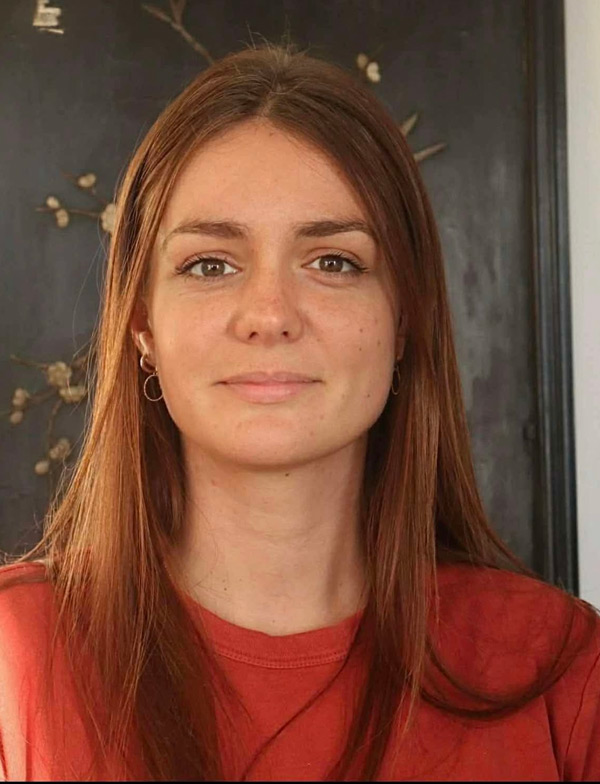
Margot Herin, currently a postdoctoral researcher at the Instituto de Telecomunicações in Lisbon, has been named the winner of the 2026 Cor Baayen Early Career Researcher Award. The annual ERCIM award recognises outstanding early-career researchers in computer science and applied mathematics.
Report on the 31st International Conference on Formal Methods for Industrial Critical Systems
- Details
- Category: Joint ERCIM Actions
- Hits: 39
by Maurice ter Beek (CNR-ISTI)
The annual conference of the ERCIM Working Group on Formal Methods for Industrial Critical Systems, FMICS, is the key conference at the intersection of industrial applications and formal methods. This year, the participants met in Liverpool, UK, on 3–4 September 2026.
European Software Community Launches Strategic Research and Innovation Agenda for the Future of Software
- Details
- Category: Joint ERCIM Actions
- Hits: 40
European researchers, research organisations and companies have presented a joint Strategic Research and Innovation Agenda (SRIA) for the Future of Software in Brussels. The agenda sets out the software capabilities Europe needs to strengthen in the coming years to help shape its digital future.
Dagstuhl Seminars and Perspectives Workshops - Call for Proposals
- Details
- Category: Annoucements
- Hits: 27
Schloss Dagstuhl – Leibniz-Zentrum für Informatik is accepting proposals for scientific seminars/workshops in all areas of computer science, in particular also in connection with other fields.
ERCIM Forum Beyond Compliance on Digital Ethics in Research - Call for Participation
- Details
- Category: Annoucements
- Hits: 30
29–30 October 2026, Porto
The fifth edition of the ERCIM Forum Beyond Compliance, dedicated to research ethics in the digital age, will take place on 29–30 October 2026 at INESC TEC in Porto, Portugal.
Training in Digital Ethics
- Details
- Category: Annoucements
- Hits: 38
28 October 2026 at INESC TEC in Porto, Portugal
Registrations are now open for a one-day Training in Digital Ethics, organised within the Horizon Europe AIOLIA project (Artificial Intelligence in Human Cognition and Behaviour), in which ERCIM is a project partner. The training is delivered by INESC TEC, an ERCIM member institute, and explores the ethical challenges arising from AI systems that shape human decision-making and interaction.
ERC Starting Grant to Advance Reliable Quantum Error Correction
- Details
- Category: Annoucements
- Hits: 40
Announcement
Jonas Helsen of CWI has received a €1.5 million ERC Starting Grant to develop new methods for analysing and certifying fault-tolerant quantum computers.
Quantum computers could solve certain problems much more efficiently than conventional computers, but their basic information units, known as qubits, are highly susceptible to errors caused by environmental disturbances and imperfect control. As computations become longer and more complex, reliable quantum error correction becomes essential.
Van Wijngaarden Awards 2026 Honour Pioneers in Mathematics and Computer Science
- Details
- Category: Annoucements
- Hits: 36
Announcement
CWI has announced the recipients of the 2026 Van Wijngaarden Awards: Carola-Bibiane Schönlieb of the University of Cambridge and Mor Harchol-Balter of Carnegie Mellon University. The awards recognise scientists whose work has made significant contributions to mathematics and computer science.