
 No. 146
  No. 145
  No. 143
  No. 142
  No. 141
  No. 140
  No. 139
 by Tereza Szybisty (OpenAIRE Amke)
A new generation of Open Science monitoring in Europe connects comparable indicators with national context and AI-enhanced policy analysis to support informed and responsible decision-making.
Open Science is now embedded in national policies, funding requirements, and research assessment debates across Europe. The challenge is no longer adoption, but understanding whether these policies are effective. Initiatives such as the Open Science Monitoring Initiative (OSMI) [L1] highlight the need for structured, transparent, and coordinated approaches to monitoring. The EOSC Open Science Observatory [L2] addresses this need by providing a framework that connects policies, practices, and impacts within a coherent and comparable model (Figure 1). The EOSC Open Science Observatory builds on the OpenAIRE Graph infrastructure described in the article by Manghi, extending it with policy and narrative layers for monitoring and decision support.
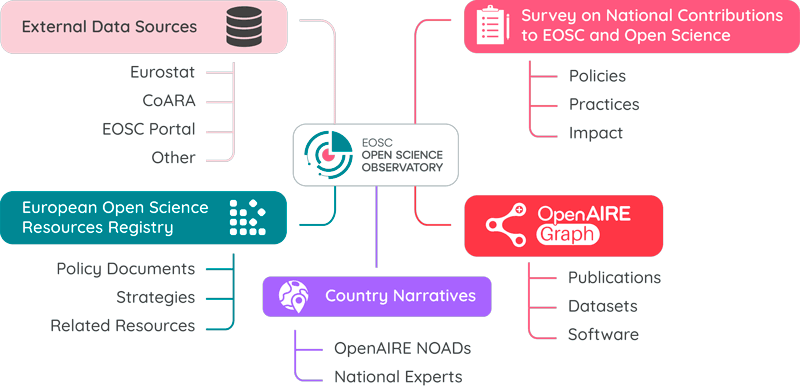
Figure 1: EOSC Open Science Observatory Data Sources.
The main evidence streams behind the 360° view
1. Structured national monitoring through the EOSC Steering Board survey
A key source is the annual survey on National Contributions to EOSC and Open Science, coordinated through the EOSC Steering Board with support from the European Commission (running annually since 2021). The survey captures comparable information across countries and is grounded in a monitoring framework (Figure 2) that organises indicators across three dimensions - policies, practices, and impacts - across eight Open Science categories: publications, data, software, services, infrastructure, skills/training, assessment, and engagement. This structured approach enables trend monitoring, and systematic identification of where enabling conditions exist (policy), where implementation occurs (practice), and what effects are visible (impact).
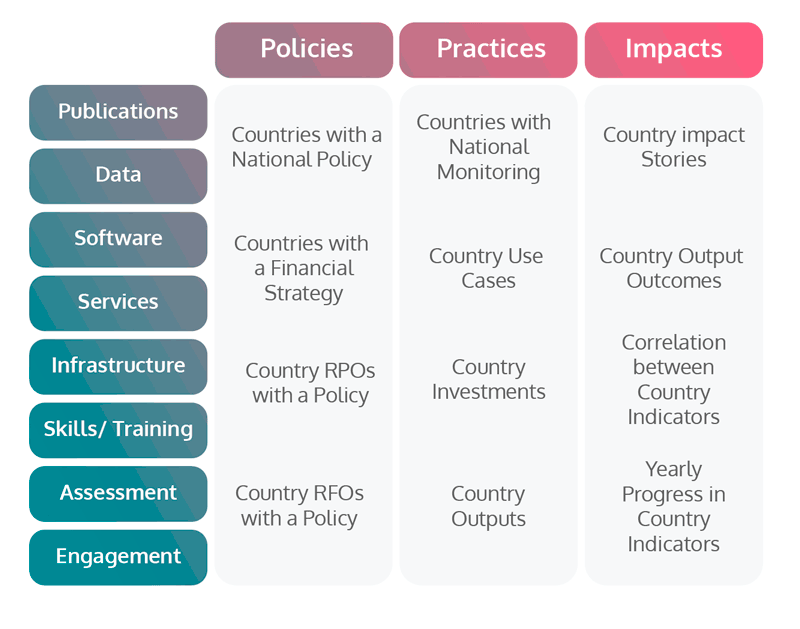
Figure 2: Monitoring Framework for National Contributions to EOSC and Open Science.
2. Research ecosystem evidence through the OpenAIRE Graph
To complement survey-based evidence, the Observatory draws on the OpenAIRE Graph [L3] as a large-scale scholarly knowledge graph that links research outputs, organisations, projects and other entities and funding relationships. This enables analyses of Open Science practices, such as Open Access uptake or links between outputs and funding, across countries and over time. The Graph is described in detail in the article on the OpenAIRE Graph by Manghi in this issue.
3. Country narratives to interpret progress and explain “why”
A crucial part of meaningful Open Science monitoring is the narrative that explains what lies behind the numbers collected through the annual survey and the OpenAIRE Graph. Indicators can show trends and levels of adoption, but they cannot explain what drove progress, which policy decisions or investments enabled change, what structural or cultural barriers persist, or what actions are planned next. To address this, the EOSC Open Science Observatory presents dedicated country pages that integrate quantitative evidence with structured national narratives, offering a contextualised view of each country’s Open Science landscape. These pages are directly connected to the OpenAIRE country pages maintained by the National Open Access Desks (NOADs), building on years of national reporting expertise and ensuring that monitoring data is anchored in locally grounded knowledge and coordinated European practice.
4. Policy intelligence through the AI-enhanced European Open Science Resources Registry
The European Open Science Resources Registry forms a fourth key pillar of the Observatory’s 360° model. It is a curated, AI-enhanced (OpenAI) collection of national policies, strategies, and best practices supporting Open Science across Europe, offering easy filtering, rich metadata, and direct access to full texts. By integrating policy documents into the monitoring ecosystem, the Registry connects measurable trends with the formal frameworks that shape them. Its AI-supported and human-curated tools help users navigate and analyse policy texts, identify relevant provisions, and compare approaches across countries.
The Observatory also integrates selected external sources, such as Eurostat and CoARA data, further enriching the picture and situating Open Science developments within the broader research and innovation landscape.
Who benefits and how the Observatory can be used
The Observatory is designed for a broad set of stakeholders, including policymakers, national Open Science coordinators, research organisations, funders, and experts. Typical use cases include:
- tracking progress over time within a country or across Europe using the policies–practices–impacts structure
- comparing thematic areas (e.g., Open Access, data stewardship, research software, citizen science) to identify where enabling conditions exist but adoption lags
- supporting policy alignment by browsing and interpreting policy documents
- informing policy reform discussions, including responsible research assessment, by connecting monitoring evidence with incentive structures and implementation realities.
As Open Science monitoring evolves globally, initiatives such as the OSMI underline the need for more coordinated, transparent, and co-creation approaches. The EOSC Open Science Observatory contributes to this shift by demonstrating how monitoring can be done with and for community, combining openness, methodological transparency, validation, and FAIR data principles. By integrating indicators, narratives, policy intelligence, and trusted external evidence in an accessible and reusable way, the Observatory offers a model for responsible monitoring beyond Open Science itself. In doing so, it strengthens the evidence base for a more open, inclusive, and sustainable European Research Area [2].
Links:
[L1] https://open-science-monitoring.org/principles/
[L2] https://www.eoscobservatory.eu/
[L3] https://graph.openaire.eu/
References:
[1] G. O’Neill, “Monitoring Framework for National Contributions to EOSC and Open Science”, 2025. DOI: 10.5281/zenodo.14919248.
[2] T. Szybisty, “Monitoring Open Science across ERA: Early Lessons from the EOSC Open Science Observatory”, 2025. DOI: 10.5281/zenodo.16991651.
Please contact:
Tereza Szybisty, OpenAIRE Amke, Czech Republic