






by Andrés Meléndez Imaz, Thomas Tamisier (LIST)
SmartCityHub acts as a structured bridge between cities and AI solutions providers through a multi-phase lifecycle designed to minimise risk and maximize scalability. It provides a testing platform within a controlled environment and ensures regulatory compliance and safety before deployment.
Smart Cities approaches define urban innovation strategies and implementation guidelines relying on digitalisation, coupled notably with the latest artificial intelligence (AI), interoperability and Local Digital Twin (LDT) technologies. To translate these strategies into practical and impactful components, advanced technologies must be validated with regard to functional and regulatory requirements. The EU has launched major investments to accelerate the development of responsible AI in Europe, in particular in the domain of Smart Cities and Communities [1], with the Testing and Experimenting Facilities (TEF) programme, which offers support to innovators and communities of users to test latest AI-based software and hardware technologies at scale in real-world environments. As part of this broad European initiative and within the project CitCom.ai [L1], LIST has established SmartCityHub (SCH) as a reference platform to conduct pilot experiments and link cities and AI innovators to create scalable AI-powered services [L2]. SCH enables on the one hand cities to explore, validate, and pilot smart city technologies. On the other hand, by linking municipalities in Luxembourg with artificial intelligence innovators across Europe, it supports collaborative experimentation of AI-driven solutions under transparent and trustworthy conditions.
More specifically, SmartCityHub helps to define the scope for innovation in cities and communities, as well as to identify opportunities for new services. The process starts by analysing functional needs, digital maturity and feasibility, as regards technical and practical deployment. A tailored set of activities is then proposed according to the idea's maturity and customer requirements, including:
- The Digital Opportunity Assessment, which identifies digitalisation opportunities for companies (use cases) and build the best suited approach to test them. The outputs are requirements for a proof-of-concept.
- The co-creation workshops, customised for communities and preceded by research on local challenges and strategic milestones, to help prioritise use cases for data analytics, AI, and Local Digital Twins.
- The technological proof-of-concept phase, which enables organisations to test solutions before investing, through the development of a tailored proof-of-concept to explore the potential of data analytics and AI.
In a subsequent phase, SCH, as part of LIST’s role as a Research and Technology Organisation (RTO), acts as a neutral and trustworthy partner to refine concrete use cases (primarily, though not exclusively, derived from workshop outcomes) and set-up a series of experiments onboarding cities and AI solution providers. We first measure and analyse the technological gaps (notably in terms of data provisioning, interoperability), followed by the deployment of cutting-edge tools; we then guide the executing of experiments in a controlled environment with relevant data, before analysing the results to extract valuable insights from the adopted solution. Additionally, matchmaking services connect cities with AI innovators based on well-defined use cases [2].
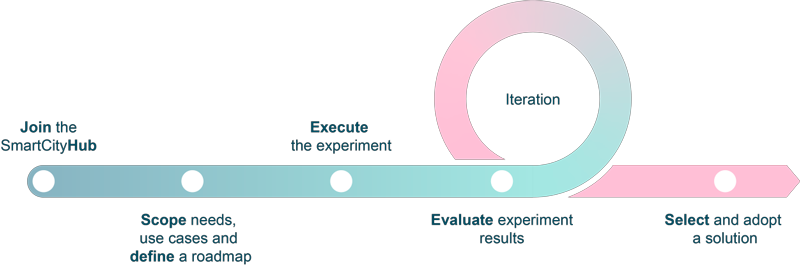
Figure 1: Lifecycle of SmartCityHub interaction.
Finally, two illustrative examples demonstrate how the SCH collaborates with cities to implement and validate innovative technologies.
In the first collaboration, a city deployed an AI-based chatbot to assist citizens by answering questions regarding administrative procedures. In close interaction with the AI provider of the solution, SCH conducted a technical evaluation based on LIST’s AI Sandbox [L3], to assess and benchmark the chatbot's large language models with respect to bias, fairness, ethical risks and to ensure their safe adoption by the public. The evaluation was done through a modular architecture that served as a communication interface between the test suite and the AI-based chatbot. This interface transmitted structured test prompts to the target AI system and collected the corresponding outputs (such as response texts and quantitative evaluation metrics) for subsequent analysis.
In the second collaboration, the city of Differdange (an industrial municipality aiming to achieve carbon neutrality by 2030) defined concrete use cases focused on energy efficiency through a needs-assessment workshop, SCH developed a proof-of-concept based on a Local Digital Twin that included:
- A dashboard aggregating data on public buildings (such as location, size, structural propertiesand historical electricity consumption).
- Simulation and what-if scenarios to identify optimal locations for electric vehicle charging stations and to estimate the potential energy production of rooftop solar panels.
These collaborations showed how SmartCityHub operationally supports different stakeholders in delivering concrete AI driven Smart City solutions.. As a European Test and Experimentation Facility, SCH offers a full range of services to connect city demand with latest AI innovations, ensuring trusted adoption and replication across different contexts through tested and tailored solutions.
Links:
[L1] https://citcomtef.eu
[L2] https://smartcityhub.list.lu
[L3] https://ai-sandbox.list.lu
References:
[1] Smart Cities: A Key to a Progressive Europe, Foundation for European Progressive Studies (FEPS), Brussels, Belgium, Mar. 2020. [Online]. Available: https://feps-europe.eu/wp-content/uploads/2020/03/Smart-Cities-A-Key-to-a-Progressive-Europe.pdf
[2] Les communes luxembourgeoises face à la transition numérique et écologique, Infogreen Luxembourg. [Online]. Available: https://www.infogreen.lu/les-communes-luxembourgeoises-face-a-la-transition-numerique-et-ecologique.html
Please contact:
Andrés Meléndez Imaz, LIST, Luxembourg
Thomas Tamisier, LIST, Luxembourg