





In this interview, Miriam Santos from the University of Porto and winner of the 2025 ERCIM Cor Baayen Award shares her perspective on why inclusion and diversity are essential for responsible science and technology. Drawing on her academic journey and her experience as founder of As Raparigas do Código, she reflects on the challenges of sustaining volunteer-driven initiatives, the lessons learned along the way, and the concrete actions research institutes and universities can take to foster more inclusive academic environments.
Why do you think it is important to promote inclusion and diversity in research institutes, universities, and society at large?
The science and technology we’re developing needs to be inclusive and diverse; otherwise it risks being biased and negatively affecting a significant amount of our society (women, ethnic minorities, people with disabilities, neurodivergents). Focusing on inclusion and diversity also allows us to counterbalance each other’s blind spots when we are researching or building a new product, application, or system. I believe that this is how we will collectively “survive” the changes that are imposed on us daily, with the current advances of science.
You are the founder of the non-profit organisation As Raparigas do Código. Can you briefly explain its aim and how it operates?
As Raparigas do Código is a non-profit organisation that aims to provide free education in technological fields to young girls and women of all ages and backgrounds. Nowadays, technology is the main driver of financial stability, personal empowerment, opportunity, innovation, and social good, and we believe that education is the single most fundamental piece that we can provide, free of cost, to anyone. We started by organizing several short courses for women during the pandemic (web development, introduction to programming, data science, personal branding) and then we moved on to planning and structuring activities for kids (in-person events) focusing on computer science, cryptography, artificial intelligence, and many others.
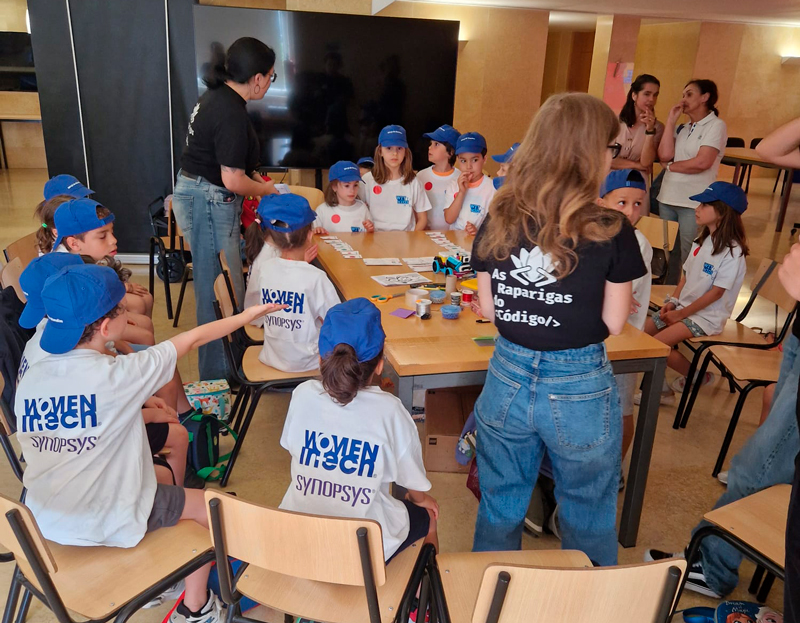
Figure 1: Raparigas do Código iprovide free education in technological fields to young girls.
What motivated you to start this organisation? And where did you start from?
As I started to “climb the academic ladder”, I realised there were less and less women in my circle. I was one of five women in my Master’s specialisation (Informatics), and the only one moving to a PhD in Intelligent Systems. There were very few female professors in Informatics Engineering (less than Physics and Mathematics), and that bothered me because I wanted to become one. The “invisibility” of it all was something that I felt I needed to change, and that perhaps I could help to change. So by 2020, I pitched the idea to my two (male and only) PhD colleagues at the time and we started a website [L1] offering free, online-courses and mentorship to women. In a short amount of time we grew a large community of women interested in learning more about technology and tech professionals (both men and women) wanting to join the team and become mentors.
How do you keep it alive? How did you managed to make it so successful?
It’s hard. I feel we created the project at a golden time, because the pandemic pushed people to remain connected somehow (it was “easier” to stay tuned to online lessons on saturday morning). At the time, the tech market also grew exponentially (there was a huge need for tech professionals, people could work from home), and companies were eager to invest to access diverse talent pools. It was also the beginning of a “general awareness wave” around the topics of gender equality, diversity, and inclusion, and we were “in the right place at the right time”. Since then, five years have passed and it is hard to keep mentors motivated for so long. Some join and some leave, with all the dynamics this brings to the group (we are all volunteers, so we work outside working hours, in our free time). We keep it alive by making it innovative, fun, and people-centred. We eventually realised that motivation arises when we are also learning and doing something challenging, when we get to code fun projects and games [L2], and when we get to witness the impact we might have in others. So we associate often with other organisations to help them build solutions, organise events, and foster education, independently of “who gets credit” for it.
What are the main challenges that you have faced? Is there any “mistake” that is important to avoid?
Motivation for once (both mine and the team’s) when committing to a project for so long, lack of experience running a team and an organisation in the beginning (with all the bureaucracy associated), lack of investment and support (funding to operationalise activities and events), burnout. One mistake I wish I had avoided was going “fast and furious” when starting the project. We grew quite fast, and it consumed some of us quickly. I believe it is similar to growing a startup sometimes: we agree to projects and ideas without the full capacity to deliver them, we want to say “yes” to everyone and everything, and we could not find the time to build a solid foundation to support that growth. Slow and steady wins the race, I guess.
How could research institutes and universities promote and support these initiatives?
Research institutes and universities are really in a position to drive change from within. Support women in their careers: promote growth opportunities for female academics, invest in women-led research projects and initiatives, create visibility for female academics within your departments, be mindful of gender representation when assembling juries, keynote speakers and chairs in conferences, and especially when distributing bureaucratic non-academic work which falls disproportionately onto women. It is also important to drive change early on: collaborate with schools in your district, foster open-days or summer schools led by some of your students, foster the creation of junior research labs for women (e.g., coding clubs initiatives), and maybe consider these types of initiatives as part of academic work (so that it can be included in the professional merit of professors or considered to reduce their schedule). Open up scholarships for promising female talent, award exceptional talent, adjust teaching and evaluation methods considering the historical and cultural biases and glass ceiling affecting women for decades. Promote a healthy, safe, and inclusive environment in your classes, especially if girls compose a minority of your class. There are so many ways in which to drive change.
Do you have any lesson learned or best practices that you would like to share with other researchers who are considering following a similar path?
Surround yourself by people who believe in you, who challenge you to be more, to be better, to aim higher. And by all means, do not let fear of failure or toxic voices stand in the way. Be unappologetically yourself, especially in academic environments that still reward conformity over impact: eventually your community will follow suit.
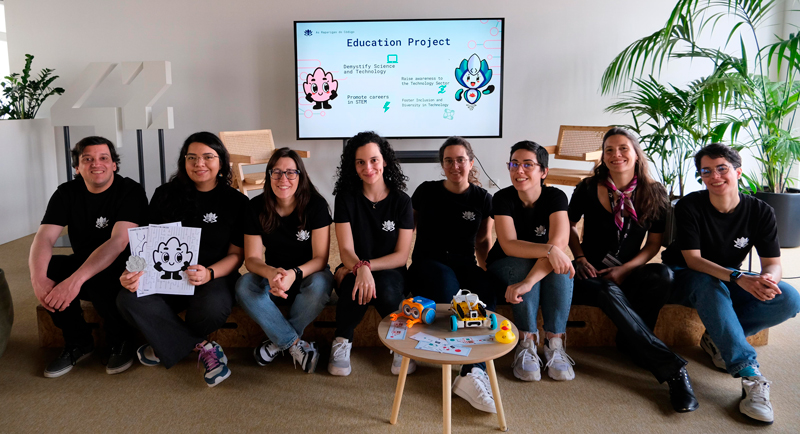
Figure 2: Team members of Raparigas do Código, a non-profit organisation offering free technology education for girls and women.
The interview was conducted by Monica Divitini, NTNU, chair of the ERCIM Human Capital Task Group.
Links:
[L1] https://raparigasdocodigo.pt
[L2] https://jogodasprofissoes.pt
Please contact:
Miriam Santos
University of Porto, Portugal