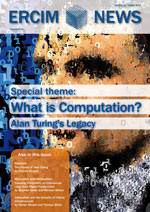
ERCIM News 91
October 2012
Special theme What is Computation - Alain Turing’s Legacy
Guest editors Gilles Dowek (Inria) and Samson Abramsky (University of Oxford)
PDF
of ERCIM News 91
40 pages



The Impact of Alan Turing
- Details
- Category: Keynote
- Hits: 18403
by Andrew Hodges
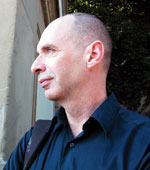 The 2012 centenary of Alan Turing’s birth has enjoyed a level of public awareness that is remarkable for any scientific figure. This is in part due to the great change in the perception of his homosexuality since the 1990s: young people can scarcely believe that British criminal law was as it was in 1952, and there has been much agitation for some sort of posthumous adjustment to his conviction. Unfortunately, just as Roger Bannister and the Comet crashes represented that particular era in Britain, so too did Turing’s conviction. This is an immutable historical fact.
What Makes Alan Turing a Great Scientist? - Introduction to the Special Theme
- Details
- Category: Special Theme
- Hits: 15263
by Gilles Dowek and Samson Abramsky
This Turing centenary marks a point at which we can realize that Alan Turing has become, with the passage of time, a scientific icon whose name is known by people in many countries world-wide, and far beyond the scientific community. This may seem a paradox because the genesis of computability theory, for which Turing is probably best known, was a collective effort, to which the names of Herbrand, Gödel, Church, Post, Kleene, Rosser and Turing are often associated.