
Traffic Planning and Logistics - Introduction to the Special Theme
by Jo van Nunen
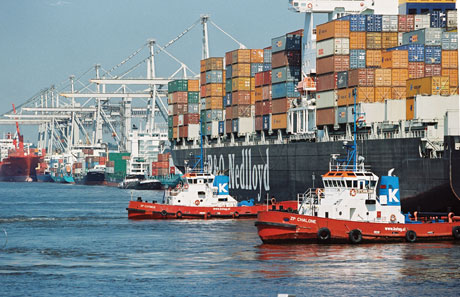
The ambition of the European Union is to take a leading position in the world economy. Crucial to the business processes that can bring such prosperity to European citizens are sustainable transport and logistics systems. Successfully developing such systems requires a balance between the three 'Ps' of sustainability – Planet, People and Profit. This is not easy, since transportation has a number of negative consequences, including congestion and undesirable emissions. In this issue of ERCIM News, scientists in the field of traffic management, transport and logistics demonstrate how mathematical modelling can help to find the right balance between the 3 'Ps' while creating a sustainable future for the transport and logistics sector. The role of information technology is also discussed, since it is increasingly important in providing the infrastructure for monitoring traffic and logistics systems, for handling collected information and for providing the algorithms and methods necessary to analyse the large amounts of data that are now available.